Best-rated answer engine optimization tools: how to choose
Compare the best-rated answer engine optimization tools using raw evidence, citation accuracy, workflow fit, red flags, and a controlled two-week pilot.
The best-rated answer engine optimization tools are not necessarily the products with the highest review-site average. The right tool is the one that accurately captures the AI answers your buyers see, preserves the evidence behind every score, and turns lost prompts into page-level actions your team can ship.
Use the fast rule: shortlist three tools, give each the same 20–40 commercial prompts, run them for two weeks, and manually audit ten results. Buy the platform that produces the most trustworthy evidence and the shortest path from a lost answer to a measurable fix.
This guide complements the broader AI visibility tools comparison, the AEO pricing guide, and the stricter AI search data accuracy checklist. Use it when you have a shortlist and need a defensible buying decision.
What are the best-rated answer engine optimization tools?
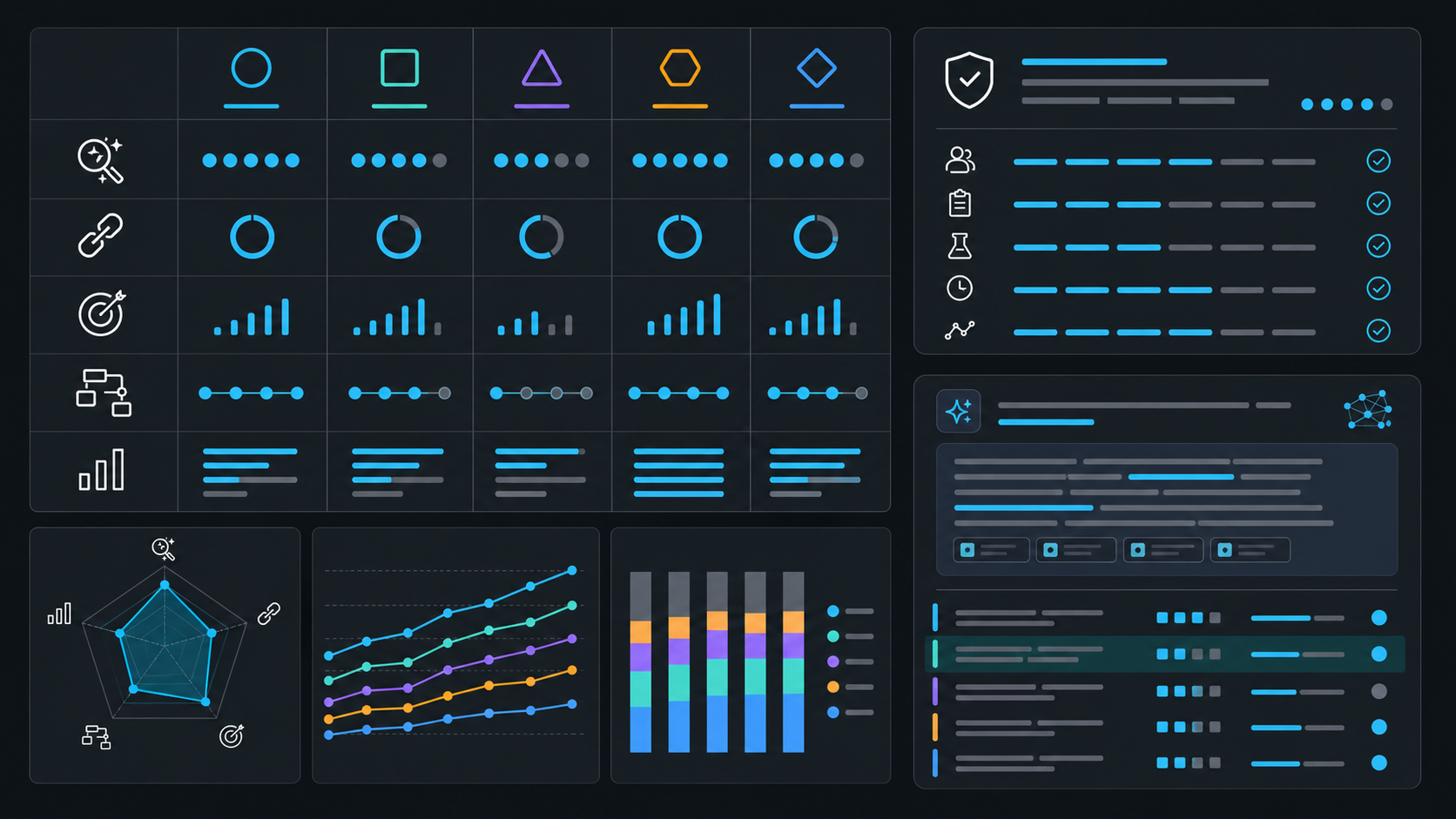
The best-rated AEO tools combine multi-engine prompt monitoring, raw answer evidence, cited-URL tracking, competitor extraction, historical comparisons, and an actionable content workflow. Ratings are useful for finding a shortlist, but a controlled pilot is the only reliable way to determine which platform fits your market, prompts, and operating team.
An answer engine optimization tool is software that measures how AI answer systems mention, recommend, describe, and cite brands and pages for a fixed set of buyer questions. A capable tool also explains which competitors and sources won, then helps the team decide what to improve.
Evaluate products by job, not by one universal leaderboard:
| Primary job | Capability that matters most | Evidence to request |
|---|---|---|
| Executive visibility reporting | Stable trends and clear methodology | Locked prompts, timestamps, scoring rules |
| SEO and content operations | Page-level diagnosis and fix queues | Cited URLs, target-page mapping, briefs |
| Competitive intelligence | Accurate brand and competitor extraction | Raw answers and entity classifications |
| Agency client reporting | Workspaces, exports, permissions, repeatability | Client-level history and export samples |
| Technical research | Complete answer and citation evidence | Engine, model, location, language, source URLs |
Which AEO tool features matter most?
The most important features are raw answer retention, exact prompt history, citation capture, separate engine reporting, competitor classification, and target-page recommendations. Dashboards and share-of-voice charts are useful only when a user can drill into the underlying answer and understand why the metric changed.
Score these capabilities before looking at cosmetic features:
- Prompt controls: Can you preserve exact wording, intent group, market, language, and run schedule?
- Answer evidence: Does every result include the raw response, engine, date, and collection settings?
- Citation evidence: Does the tool store complete source URLs and distinguish a citation from a brand mention?
- Entity accuracy: Can it separate your brand, similarly named entities, products, and competitors?
- Historical comparison: Can you compare the same prompt cohort without silent methodology changes?
- Action workflow: Does a loss map to an intended page, diagnosis, owner, and recheck date?
- Exports and ownership: Can you export prompts, answers, sources, classifications, and history?
If a tool compresses all seven into one proprietary score, the score is not decision-grade.
How should you compare top-rated AEO tools?
Compare top-rated AEO tools with a controlled pilot: identical prompts, engines, markets, timing, and scoring rules. Manually audit a sample, measure agreement with the raw answers, and ask each team to produce a fix queue from the same losses. This reveals data and workflow quality that reviews cannot test for your category.
Use a 100-point scorecard:
| Criterion | Weight | Passing test |
|---|---|---|
| Raw evidence and auditability | 25 | Every score traces to a prompt, answer, source, and timestamp |
| Mention, citation, and competitor accuracy | 20 | Manual audit agrees on at least 18 of 20 sampled classifications |
| Engine and market coverage | 15 | Covers the surfaces and regions your buyers actually use |
| Page-level recommendations | 15 | Lost prompts become specific, credible page fixes |
| Trend methodology | 10 | Comparisons use a stable prompt cohort and disclosed settings |
| Team workflow | 10 | Owners can assign, publish, and recheck without spreadsheet repair |
| Export, permissions, and support | 5 | Data is portable and access matches the team structure |
Set your weights before vendor demos. Otherwise, the best presentation tends to redefine what “best” means.
Why do AEO tool ratings disagree?
AEO tool ratings disagree because buyers value different jobs and vendors collect different evidence. One reviewer may reward a simple dashboard, while another needs raw citations across five engines. Prompt wording, geography, model access, run timing, entity matching, and scoring formulas can also produce different results from the same brand.
Common causes include:
- one product counts any brand mention while another counts only recommendations;
- citations and mentions are combined into one visibility score;
- vendors cover different AI engines or query them at different times;
- prompts are generated automatically instead of locked by buyer intent;
- similar brand names create false positives;
- reviewers evaluate onboarding but never audit result accuracy;
- enterprise ratings reward governance that a small team does not need.
Treat a five-star average as discovery evidence, not measurement evidence. The platform still has to survive your test.
How do you test an AEO tool before buying?
Test an AEO tool by running 20–40 fixed prompts across discovery, comparison, alternatives, pricing, integration, and failure-mode intent for two weeks. Audit at least ten raw answers per vendor, compare citations and competitors, and require each platform to recommend three page changes that can be re-measured.
Two-week pilot checklist
- Define one product, audience, market, and accountable buyer.
- Lock the exact prompt set before the first run.
- Include ChatGPT, Perplexity, Gemini, Claude, or Google AI surfaces only where relevant.
- Save the raw answer, citations, model surface, timestamp, and settings.
- Manually label mentions, recommendations, citations, competitors, and incorrect claims.
- Compare the labels with every vendor's output.
- Ask each vendor to map five lost prompts to intended source pages.
- Ship one low-risk page improvement if the pilot permits it.
- Re-run the unchanged prompts after discovery or recrawl.
- Calculate total operating time, not just subscription cost.
The winning tool should help your team answer four questions quickly: What changed? What evidence proves it? Which page owns the loss? What should we do next?
Should you choose the highest-rated or most accurate AEO tool?
Choose the most accurate and auditable tool when its output drives content, SEO, or revenue decisions. Choose the easiest tool only when you need a lightweight snapshot and will manually verify the findings. The ideal platform combines reliable evidence with a workflow the team will actually use every week.
Use this decision rule:
| Situation | Priority |
|---|---|
| Board or client reporting | Reproducible methodology and exports |
| Weekly content operations | Accuracy plus page-level action queue |
| One-time market snapshot | Ease of setup and sensible defaults |
| Regulated or high-risk claims | Raw evidence, review trail, and answer accuracy |
| Multi-brand enterprise | Permissions, segmentation, governance, and support |
A simple product that leads to ten correct fixes beats a feature-rich product that produces a monthly screenshot. A precise product nobody can operate also fails. Measure both evidence quality and time to action.
What red flags should you avoid?
Avoid an AEO tool that hides prompts, raw answers, cited URLs, timestamps, or scoring logic. Other red flags include changing prompt sets, blended engine scores, unverifiable competitor counts, guaranteed AI rankings, and recommendations that cannot identify the page or evidence needed to improve an answer.
Walk away or extend the pilot when:
- the vendor cannot export raw results;
- a “citation” report does not show the cited URL;
- the score changes without a traceable answer change;
- every lost prompt produces the same generic content recommendation;
- the demo uses only branded prompts where the customer already wins;
- pricing scales with opaque “AI searches” rather than useful prompt coverage;
- the contract is annual but meaningful testing requires paid onboarding.
FAQ
What is the best-rated answer engine optimization tool? The best-rated AEO tool is the product that performs best on your fixed prompt set, markets, AI engines, and workflow. Use public ratings to create a shortlist, then compare raw answer evidence, citation accuracy, competitor extraction, historical methodology, and page-level actions in a controlled pilot.
How many AEO tools should I test? Test two or three serious candidates. More vendors create evaluation work without necessarily improving the decision. Give every candidate the same 20–40 buyer prompts, engines, market, run window, and manual accuracy sample.
How long should an AEO tool pilot run? Run the initial comparison for about two weeks to test collection, accuracy, reporting, and workflow. If you want to prove whether recommended page changes improve answers, extend the pilot through publishing, discovery or recrawl, and a stable recheck.
Can review-site ratings identify the most accurate AEO tool? No. Reviews can reveal usability, support, and recurring complaints, but they rarely test exact prompts against raw AI answers for your category. Accuracy requires a manual audit using disclosed collection and scoring rules.
What is the most important AEO tool metric? For source ownership, target-page citation rate is highly useful. Pair it with recommendation rate and answer accuracy. Every metric should trace back to the exact prompt, answer, cited URL, engine, and timestamp.
Do small teams need an enterprise AEO platform? Usually not. A small team should start with one market, 20–40 high-intent prompts, weekly or monthly runs, raw evidence, and a clear fix queue. Pay for enterprise governance only when multiple brands, markets, teams, or compliance requirements make it necessary.
Pick the tool that makes the next fix obvious
Do not buy from a ratings table alone. Run the same buyer questions through each finalist, inspect the evidence, and see which product turns losses into credible page changes fastest. Start with a free Tracemetry audit, explore the features, or book a demo to compare your real prompt set instead of a staged dashboard.
Frequently asked questions
What is the best-rated answer engine optimization tool?
The best-rated AEO tool is the product that performs best on your fixed prompt set, markets, AI engines, and workflow. Use public ratings to create a shortlist, then compare raw answer evidence, citation accuracy, competitor extraction, historical methodology, and page-level actions in a controlled pilot.
How many AEO tools should I test?
Test two or three serious candidates. More vendors create evaluation work without necessarily improving the decision. Give every candidate the same 20–40 buyer prompts, engines, market, run window, and manual accuracy sample.
How long should an AEO tool pilot run?
Run the initial comparison for about two weeks to test collection, accuracy, reporting, and workflow. If you want to prove whether recommended page changes improve answers, extend the pilot through publishing, discovery or recrawl, and a stable recheck.
Can review-site ratings identify the most accurate AEO tool?
No. Reviews can reveal usability, support, and recurring complaints, but they rarely test exact prompts against raw AI answers for your category. Accuracy requires a manual audit using disclosed collection and scoring rules.
What is the most important AEO tool metric?
For source ownership, target-page citation rate is highly useful. Pair it with recommendation rate and answer accuracy. Every metric should trace back to the exact prompt, answer, cited URL, engine, and timestamp.
Do small teams need an enterprise AEO platform?
Usually not. A small team should start with one market, 20–40 high-intent prompts, weekly or monthly runs, raw evidence, and a clear fix queue. Pay for enterprise governance only when multiple brands, markets, teams, or compliance requirements make it necessary.
Make your next SEO decision with better evidence.
Explore practical guides to AI visibility, source citations, and choosing the right tools for your team.